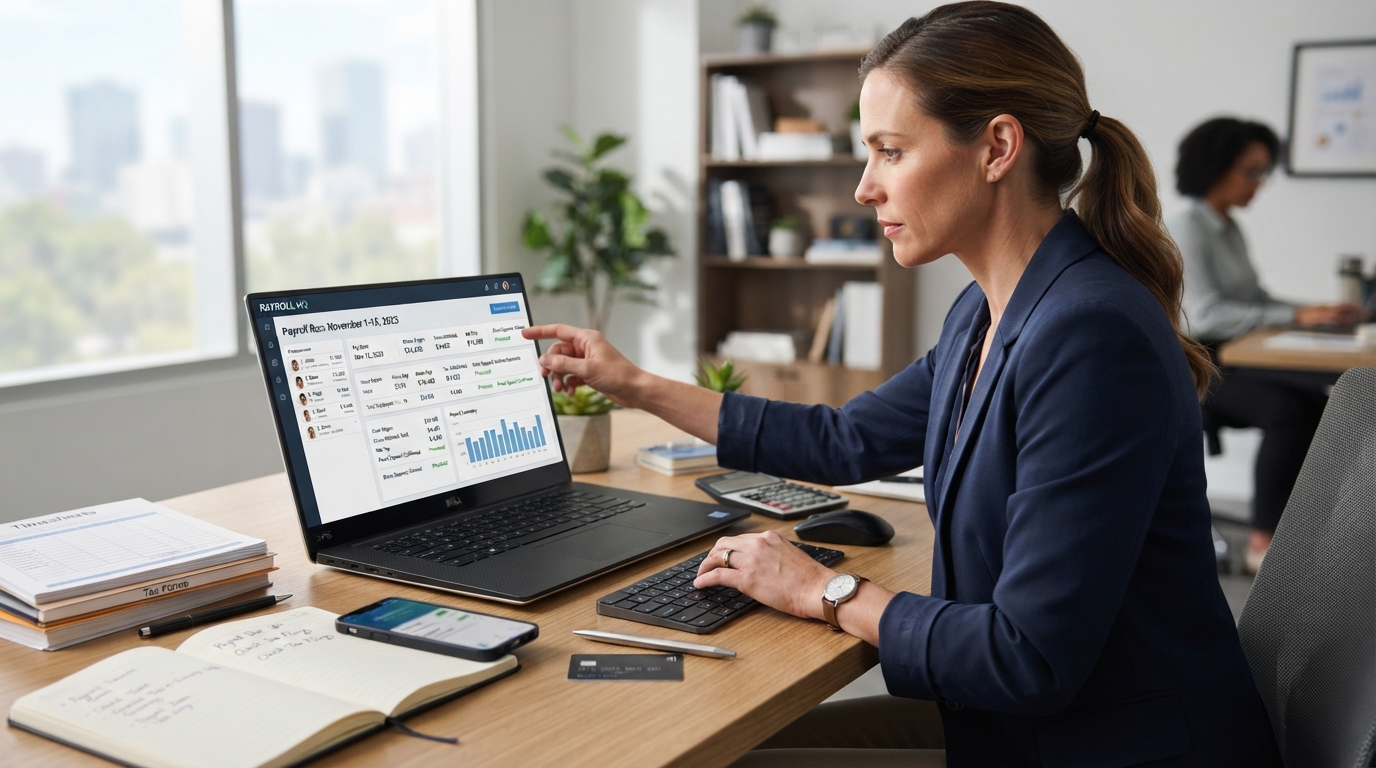
Managing business finances with spreadsheets can work when a company is very small. But as invoices, expenses, bank transactions, payroll, taxes, and customer payments increase, manual bookkeeping becomes harder to maintain and easier to get wrong.
The best accounting software for small businesses in 2026 can automate many routine financial tasks while giving business owners a clearer view of revenue, expenses, cash flow, and profitability. However, the right platform depends on the size of the business, industry, number of users, budget, reporting requirements, and need for integrations.
Current 2026 comparisons commonly identify QuickBooks Online, Xero, FreshBooks, Wave, and Zoho Books among the leading options for small businesses, although each platform is designed for somewhat different needs. (NerdWallet)
What Is Accounting Software?
Accounting software is a digital system that helps businesses record, organize, and analyze financial transactions.
Depending on the platform and subscription level, accounting software can help with:
- Income and expense tracking
- Invoicing
- Bill management
- Bank reconciliation
- Financial reporting
- Accounts payable
- Accounts receivable
- Sales-tax tracking
- Cash-flow management
- Payroll integrations
- Inventory management
- Time tracking
- Expense management
The goal is not simply to replace spreadsheets. Good accounting software creates a more organized financial record and reduces repetitive administrative work.
Best Accounting Software for Small Businesses in 2026
There is no single accounting platform that is perfect for every business. The following options stand out for different types of small-business users.
1. QuickBooks Online: Best Overall
QuickBooks Online is one of the strongest all-around choices for small businesses that need comprehensive accounting functionality.
Current 2026 reviews rank QuickBooks Online as a leading option for most small businesses because of its broad accounting capabilities, integrations, reporting, and compatibility with accountants. (NerdWallet)
Key capabilities can include:
- Income and expense tracking
- Invoicing
- Bank connections
- Financial reports
- Tax-related tools
- Inventory management on applicable plans
- Payroll options
- Third-party integrations
- Accountant access
Pros
- Comprehensive accounting features
- Large ecosystem of integrations
- Strong accountant familiarity
- Scalable for growing businesses
- Extensive reporting capabilities
Cons
- Can become expensive as additional features are needed
- Some features require higher-tier plans or add-ons
- The number of available features can feel overwhelming for very small businesses
Best for: Small businesses that want a broad accounting system with room to grow.
2. Xero: Best for Growing Teams
Xero is a strong option for businesses that prioritize collaboration and multi-user accounting.
Current comparisons highlight Xero for its clean accounting workflow, bank reconciliation capabilities, and support for multiple users without the same per-user licensing structure used by some competitors. (Fit Small Business)
Xero can support:
- Invoicing
- Bank reconciliation
- Expense management
- Financial reporting
- Inventory
- Multi-currency accounting
- Business integrations
- Accountant collaboration
Pros
- Strong collaboration features
- Unlimited users on applicable plans
- Clean interface
- Useful bank-reconciliation tools
- Suitable for growing businesses
Cons
- Some advanced features require higher-tier plans
- May require customization depending on the business
- Payroll availability varies by market
Best for: Growing businesses and teams that need multiple people to access financial information.
3. FreshBooks: Best for Freelancers and Service Businesses
FreshBooks is particularly well suited to freelancers, consultants, agencies, and other service-based businesses.
Its focus on invoicing, time tracking, projects, and client management makes it attractive for businesses that bill customers for professional services.
Current 2026 comparisons identify FreshBooks as a strong choice for project-based businesses and service professionals. (NerdWallet)
Useful features include:
- Professional invoicing
- Expense tracking
- Time tracking
- Project management
- Client management
- Estimates
- Financial reporting
- Online payments
Pros
- User-friendly interface
- Strong invoicing tools
- Useful for client-based businesses
- Built-in time tracking
- Good project-accounting capabilities
Cons
- May not be ideal for businesses with complex inventory requirements
- Some advanced features require higher plans
- Businesses with complex accounting needs may eventually need a more comprehensive platform
Best for: Freelancers, consultants, agencies, and service businesses.
4. Wave: Best Free Option for Basic Accounting
Wave can be appealing to freelancers and very small businesses that want to keep software costs low.
Current 2026 comparisons identify Wave as one of the strongest options for businesses looking for free core accounting and invoicing capabilities. (NerdWallet)
Its features can include:
- Income tracking
- Expense tracking
- Invoicing
- Financial reporting
- Basic bookkeeping
- Receipt management
Pros
- Free core accounting option
- Straightforward interface
- Useful for micro-businesses
- Accessible entry point for new businesses
Cons
- Advanced capabilities are more limited
- Payroll and payment processing may involve additional costs
- Not designed for businesses with highly complex accounting requirements
Best for: Freelancers, solopreneurs, and micro-businesses with straightforward financial needs.
5. Zoho Books: Best for Businesses Using Zoho
Zoho Books is particularly attractive to businesses already using other Zoho products.
The platform provides accounting functionality alongside the broader Zoho ecosystem, which can help businesses connect financial information with other operational processes. Current 2026 reviews identify Zoho Books as a strong value-oriented option with useful automation and integration capabilities. (NerdWallet)
Features can include:
- Invoicing
- Expense management
- Bank reconciliation
- Inventory
- Financial reporting
- Automation
- Multi-currency support
- Integration with other Zoho applications
Pros
- Strong value for features
- Useful automation
- Broad Zoho ecosystem
- Good mobile experience
- Scalable plans
Cons
- Best value may come when using other Zoho products
- Some advanced features require higher plans
- Businesses unfamiliar with the Zoho ecosystem may need time to learn the platform
Best for: Small businesses already using Zoho or looking for an integrated business software ecosystem.
Quick Comparison of the Best Accounting Software
| Software | Best For | Main Strength |
|---|---|---|
| QuickBooks Online | Most small businesses | Comprehensive accounting |
| Xero | Growing teams | Collaboration and reconciliation |
| FreshBooks | Freelancers and service businesses | Invoicing and project accounting |
| Wave | Micro-businesses | Free core accounting |
| Zoho Books | Zoho users | Value and automation |
Pricing changes frequently, and the actual cost depends on the plan, promotions, users, add-ons, and region. Current 2026 comparisons show entry-level pricing ranging from free options to paid subscriptions, so businesses should verify the latest pricing directly with each provider before purchasing. (Fit Small Business)
Why Small Businesses Need Accounting Software
Accounting software can provide benefits that go beyond simply recording transactions.
Better Financial Organization
Instead of maintaining multiple spreadsheets, receipts, and documents, businesses can centralize financial information.
Faster Invoicing
Digital invoicing allows businesses to create and send invoices more efficiently.
Faster invoicing can also help businesses improve their cash-collection process.
Improved Expense Tracking
Accounting software can categorize business expenses and make it easier to monitor spending.
Easier Bank Reconciliation
Many accounting platforms can connect to financial accounts and help match transactions with bookkeeping records.
Better Financial Reporting
Businesses can generate reports showing information such as:
- Revenue
- Expenses
- Profit and loss
- Accounts receivable
- Cash flow
- Outstanding invoices
These reports can help owners understand the financial condition of the company.
Important Features to Look For
Choosing accounting software based only on price is a mistake. The cheapest platform may not provide the functionality your business needs.
Invoicing
If your business regularly bills customers, look for customizable invoices, recurring billing, payment options, and automated reminders.
Expense Tracking
The software should make it easy to record and categorize expenses.
Bank Integration
Automatic bank feeds can reduce manual data entry and make reconciliation easier.
Financial Reports
At minimum, consider whether the software provides useful reports such as profit and loss statements, balance sheets, cash-flow information, and accounts receivable reports.
Tax Support
Look for tools that help organize financial information for tax preparation. However, accounting software does not replace professional tax advice.
Payroll
If you have employees, determine whether payroll is built into the platform or requires a separate service or integration.
Inventory
Retailers, wholesalers, and product-based businesses should prioritize inventory functionality.
Multi-User Access
If your accountant, bookkeeper, manager, or employees need access, check the number of users included with each plan.
Integrations
Consider whether the software connects with:
- Banking platforms
- Payment processors
- Payroll systems
- E-commerce platforms
- CRM software
- Expense-management tools
- Tax applications
Cloud Accounting vs. Desktop Accounting
Modern small businesses often choose cloud-based accounting software because it can be accessed from multiple devices and locations.
Cloud Accounting
Advantages include:
- Remote access
- Automatic updates
- Cloud backups
- Multi-user collaboration
- Integration with other online tools
Desktop Accounting
Desktop software can still be useful for businesses that prefer local data storage or have specific offline requirements.
However, desktop systems may provide less flexibility for remote collaboration and can require more manual maintenance.
The right option depends on your business’s workflow and technical requirements.
How Much Does Accounting Software Cost?
Accounting software pricing varies significantly.
Some providers offer free plans, while paid platforms may charge monthly or annual subscription fees.
Additional costs can come from:
- Payroll
- Payment processing
- Additional users
- Inventory features
- Advanced reporting
- Premium support
- Tax features
- Integrations
For example, current 2026 comparisons list Wave as a free core option, while QuickBooks Online, Xero, FreshBooks, and other platforms use paid subscription tiers. (Fit Small Business)
Always calculate the total annual cost, rather than relying on a promotional introductory price.
How to Choose the Best Accounting Software
Step 1: Identify Your Business Type
A freelancer does not have the same accounting requirements as a retailer with inventory and employees.
Start by identifying the features your business actually needs.
Step 2: Determine Your Budget
Decide how much you are willing to spend each year.
Remember to include add-ons and payment-processing costs.
Step 3: List Essential Features
Separate features into three categories:
Essential: Your business cannot operate efficiently without them.
Useful: They would improve productivity.
Optional: They are convenient but not necessary.
This prevents you from paying for features you will never use.
Step 4: Compare Multiple Platforms
Compare at least three providers before making a decision.
Look at:
- Features
- Pricing
- User limits
- Integrations
- Security
- Customer support
- Scalability
- Ease of use
Step 5: Test the Software
If a free trial or demonstration is available, use it.
Do not judge software only from screenshots. Test the actual workflows you will use every day.
Step 6: Consider Your Accountant
If you already work with an accountant or bookkeeper, ask which platforms they support.
A platform that your accountant already knows can make collaboration significantly easier.
Common Accounting Software Mistakes
Choosing the Cheapest Software
Low cost is useful, but not if the software lacks essential features.
Paying for Too Many Features
The opposite mistake is purchasing a sophisticated plan that your business does not need.
Ignoring Scalability
Your software should be able to support reasonable growth without forcing you to migrate immediately.
Forgetting About Data Export
Before committing to a platform, understand how you can export your financial records if you eventually switch providers.
Not Checking Integration Compatibility
Make sure your accounting software works with your existing payment, banking, payroll, and e-commerce systems.
Treating Software as a Replacement for an Accountant
Accounting software automates bookkeeping tasks, but it does not eliminate the need for professional advice in complex tax, legal, or financial situations.
Frequently Asked Questions
What is the best accounting software for a small business in 2026?
QuickBooks Online is a strong overall option for many small businesses, while Xero, FreshBooks, Wave, and Zoho Books can be better suited to specific business models and budgets. Current 2026 comparisons consistently place these platforms among the leading options. (NerdWallet)
What is the best free accounting software for small businesses?
Wave is one of the leading choices for free core accounting and invoicing. Some other providers also offer free plans with specific eligibility or feature limitations. (NerdWallet)
Is QuickBooks better than Xero?
Neither is automatically better. QuickBooks may be preferable for businesses wanting broad accounting functionality and a large accountant ecosystem, while Xero can be attractive to growing teams that prioritize collaboration and multi-user access.
Is FreshBooks good for small businesses?
FreshBooks can be particularly useful for freelancers, consultants, agencies, and other service businesses that rely heavily on invoicing, time tracking, and project-based billing.
Can accounting software replace an accountant?
Accounting software can automate many bookkeeping tasks, but it does not replace professional accounting or tax advice in every situation. Businesses with complex tax structures, payroll, international operations, or significant financial decisions may still benefit from working with a qualified professional.
What should a small business look for in accounting software?
At minimum, evaluate invoicing, expense tracking, bank reconciliation, financial reporting, security, pricing, user access, integrations, and scalability. Businesses with employees or inventory should also examine payroll and inventory capabilities.
Final Thoughts
The best accounting software for small businesses in 2026 depends on what your business actually needs.
QuickBooks Online is a strong all-around choice for businesses seeking comprehensive accounting functionality. Xero is worth considering for growing teams and collaboration. FreshBooks is particularly suitable for freelancers and service providers. Wave provides an accessible option for very small businesses seeking free core accounting. Zoho Books can be a strong choice for businesses that value automation and the broader Zoho ecosystem. (NerdWallet)
Do not choose accounting software simply because it is popular. Compare the features, total cost, user limits, integrations, reporting capabilities, and scalability against your actual business requirements.
The right software should make your financial operations simpler, more organized, and easier to manage, not add another layer of complexity.